Food, minus the water.
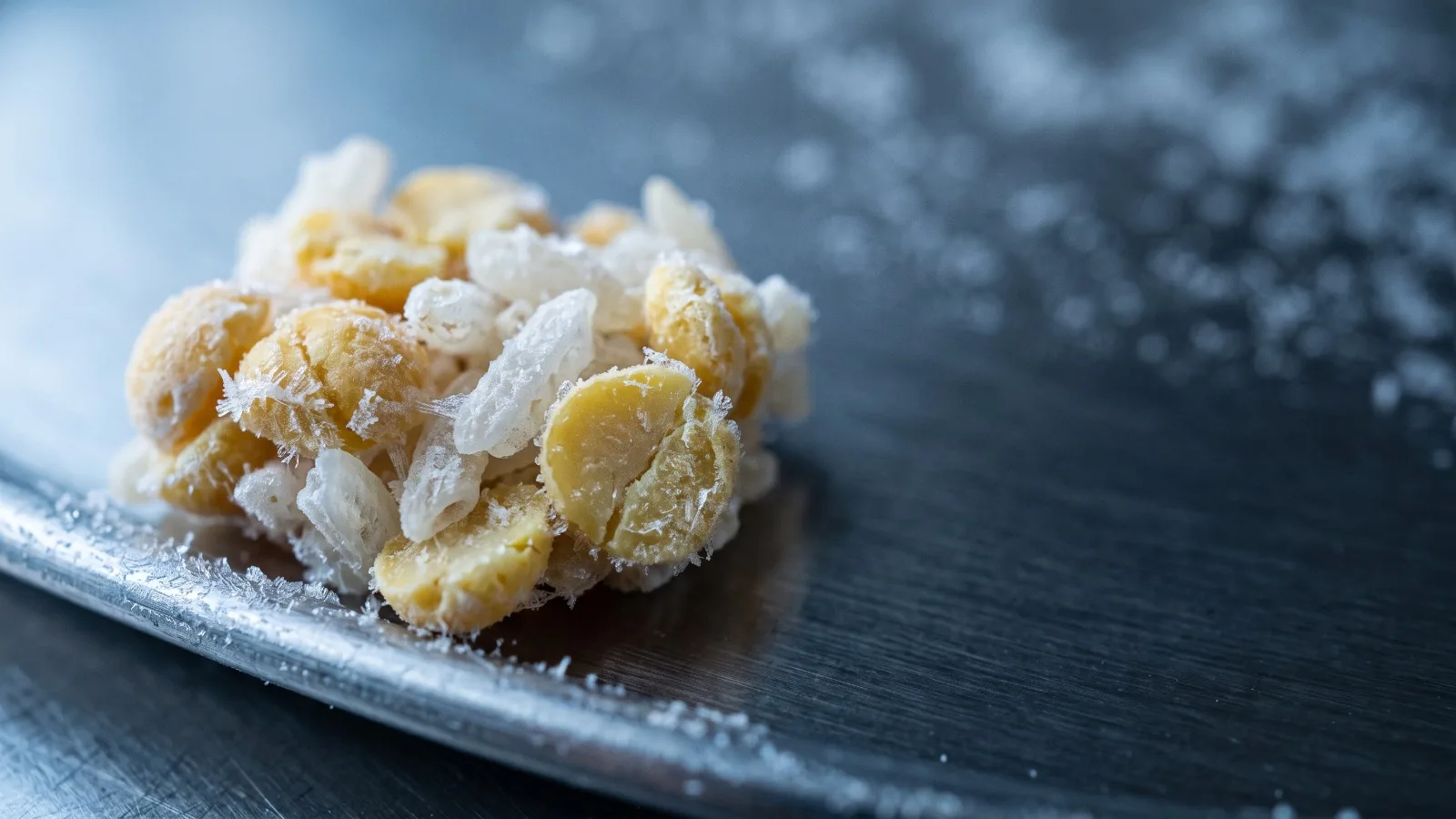
Freeze-dried food is real cooked food with almost all the water taken out. Add hot water, wait a few minutes, and it comes back close to the way it was cooked, at about a quarter of the weight.
Typical for a cooked meal like dal and rice.
What is freeze-dried food?
The short answer, before any of the science.
It is normal food, cooked the normal way, then frozen and dried so that only 2 to 4 percent of its water is left.
Nothing is added to make it last. Germs need water to grow, and with the water gone they cannot. The food keeps its shape, colour and taste because it is dried while frozen, not baked or fried.
To eat it, you give the water back. A cup of hot water and a few minutes turn a light, dry pouch into a hot meal again.
Who uses it
Anyone who wants a proper home-style meal where cooking is hard or the kitchen is far away.
How to eat it
Most meals need nothing but hot water and a few minutes. The small details decide how good it tastes.
- Open and stirTear the pack open and loosen the dry food so water can reach every piece.
- Add hot waterWater just off the boil, up to the marked line or the amount on the pack. Not lukewarm.
- Seal it and waitClose the zip or cover the cup. The steam does the work. Most meals take about 7 minutes.
- Stir and eatStir from the bottom, check the texture, and add a splash more water if it is still firm.
When it goes wrong
How much water?
Typical starting points. Every food and pack is a little different, so the pack instructions come first.
Rehydration
Water and soaking time for the dry food you have.
 0 ml
Freeze-dried, retort or dehydrated?
The three common kinds of ready-to-eat meals, side by side.
| Freeze-dried | Retort pouch | Dehydrated | |
|---|---|---|---|
| How it is made | Cooked, frozen, then dried in a vacuum | Cooked and sealed wet, then heated under pressure in the pouch | Dried with warm air for hours |
| Weight of one meal | About 60 to 80 g | About 250 to 350 g | About 80 to 120 g |
| What you need | Hot water | Nothing, or hot water to warm it | Hot water, often a stove to simmer |
| Time to eat | About 7 minutes | Ready, or 5 minutes to heat | 10 to 20 minutes |
| Taste and texture | Close to freshly cooked | Soft, slow-cooked taste | Chewier, often changed |
| Fridge needed | No, while sealed | No, while sealed | No, while sealed |
| Best for | Travel, treks, students abroad, light bags | Home, office, car trips | Snacks and budget packs |
Typical values. Each brand and dish is a little different.
How many meals fit in your bag?
Pick a trip, or set how many kilos of your bag you can give to food.
Based on about 70 g for a freeze-dried meal and 300 g for a retort pouch. Check your airline’s limit and the food rules of the country you are going to.
Can you freeze-dry it?
Most cooked Indian meals dry well. Very oily, buttery or sugary food is where it goes wrong.
More foods
Nothing matches that yet. Try a shorter word.
How it is made
Scroll through the five steps inside a freeze dryer. Watch the water in the food fall.
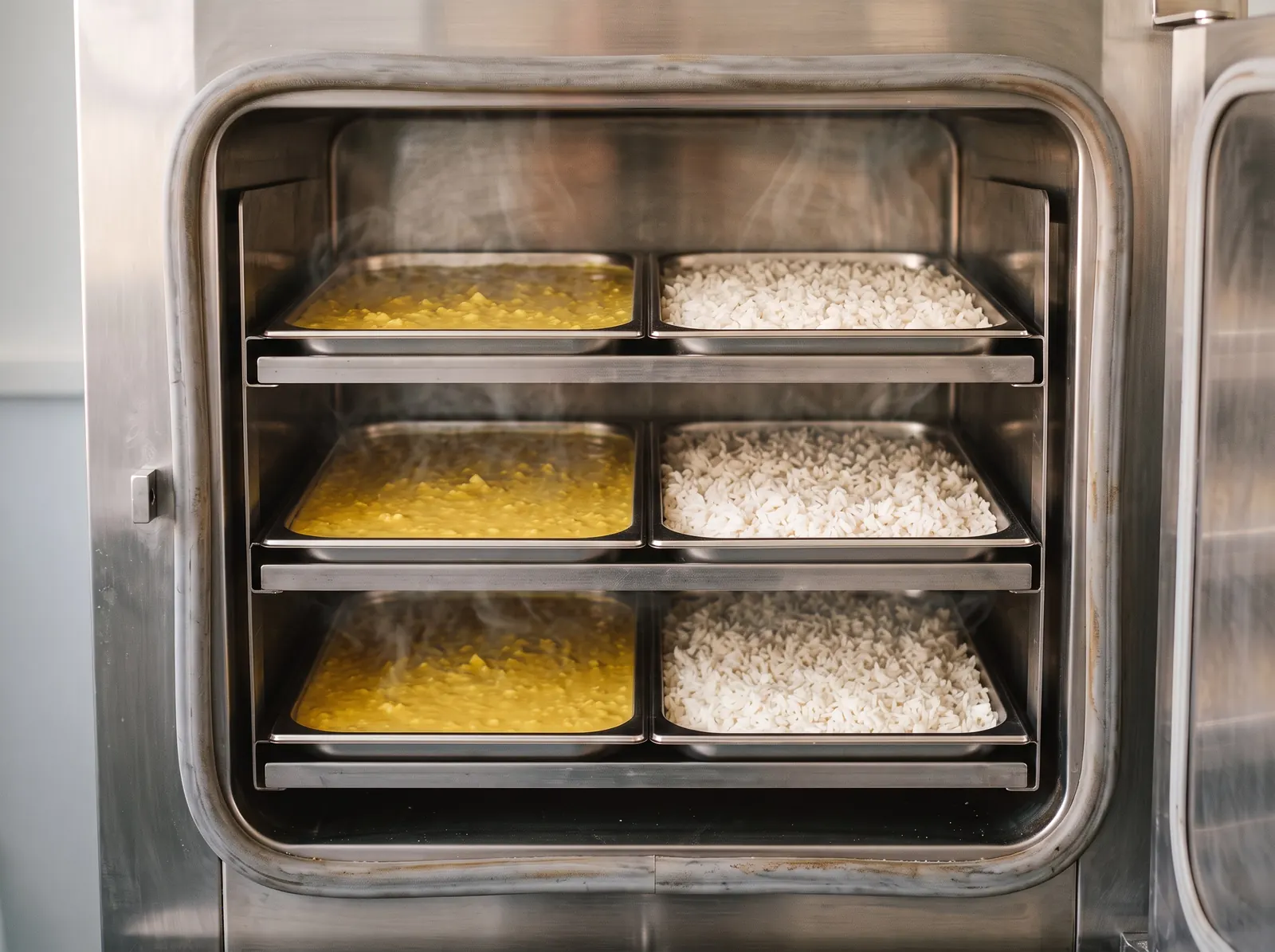
Cooked food goes in warm
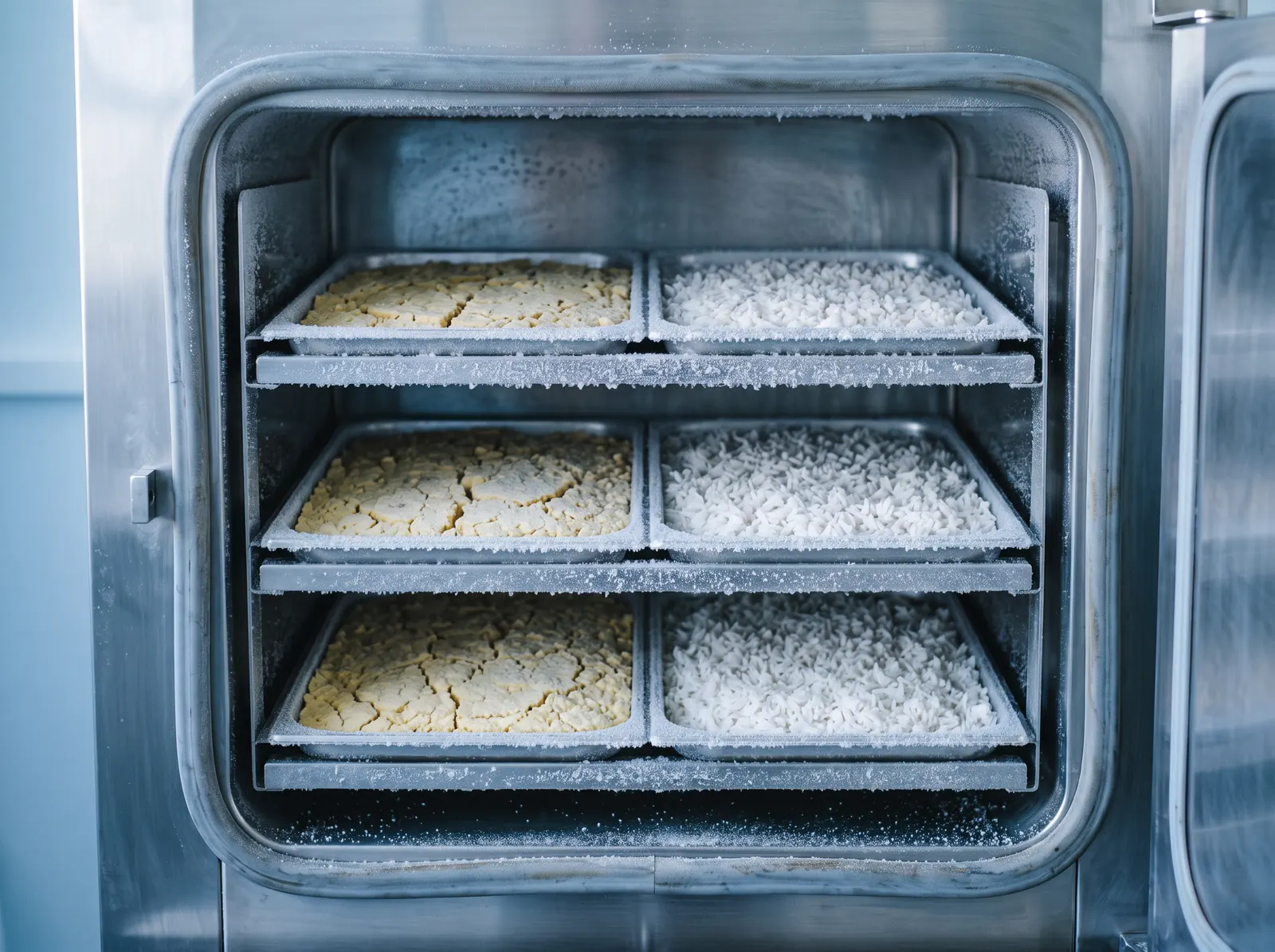
Trays of freshly cooked dal and rice slide onto the shelves. About three quarters of their weight is water.
Frozen hard, fast
The shelves get very cold. The water in the food becomes small ice crystals, so the food keeps its shape.
The air is pulled out
A pump pulls the air out of the chamber. The food stays frozen the whole time.
Ice turns straight to vapour
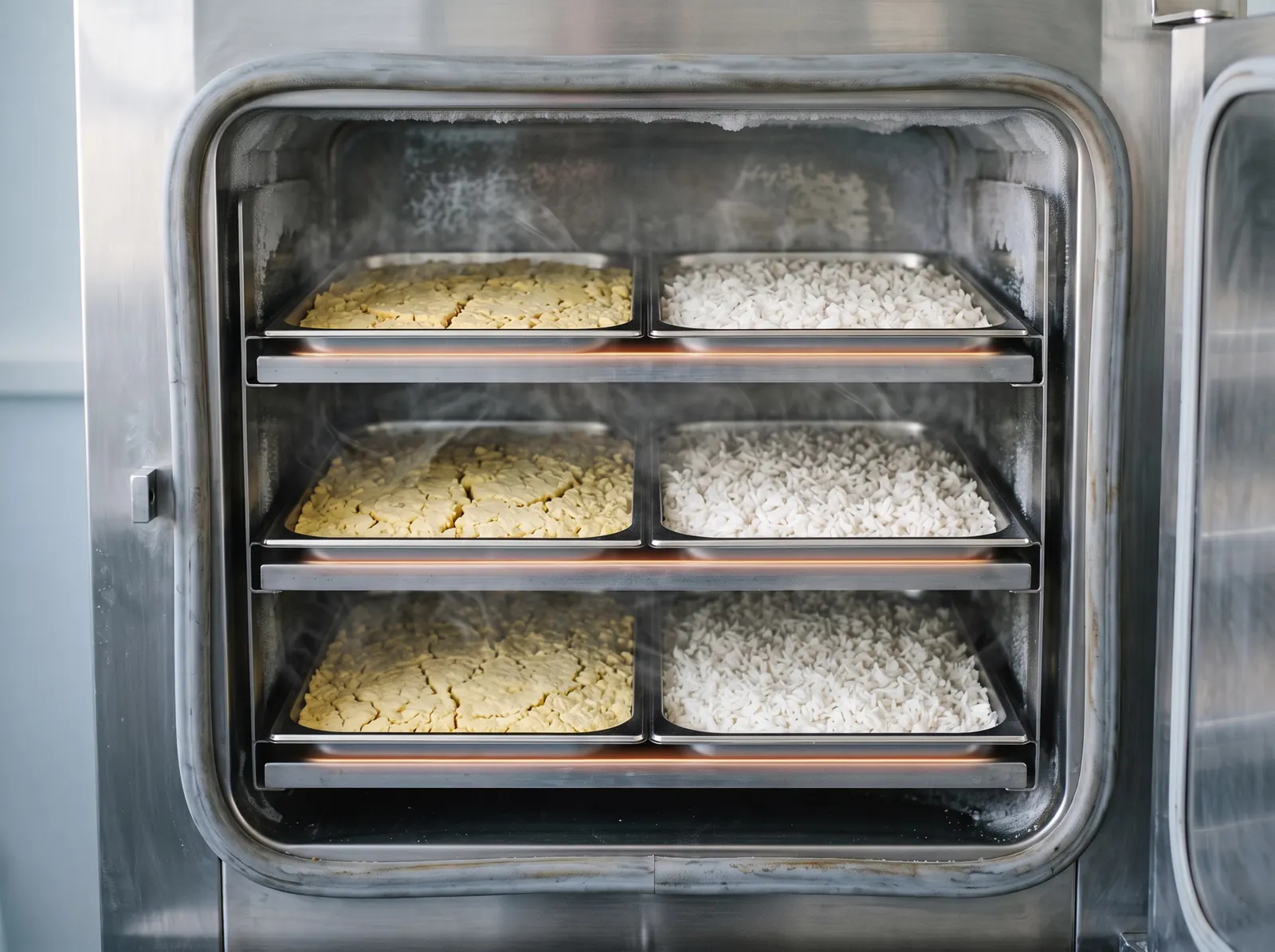
The shelves warm gently. The ice leaves as vapour without ever melting, and freezes again on a very cold coil.
The last bit of water goes
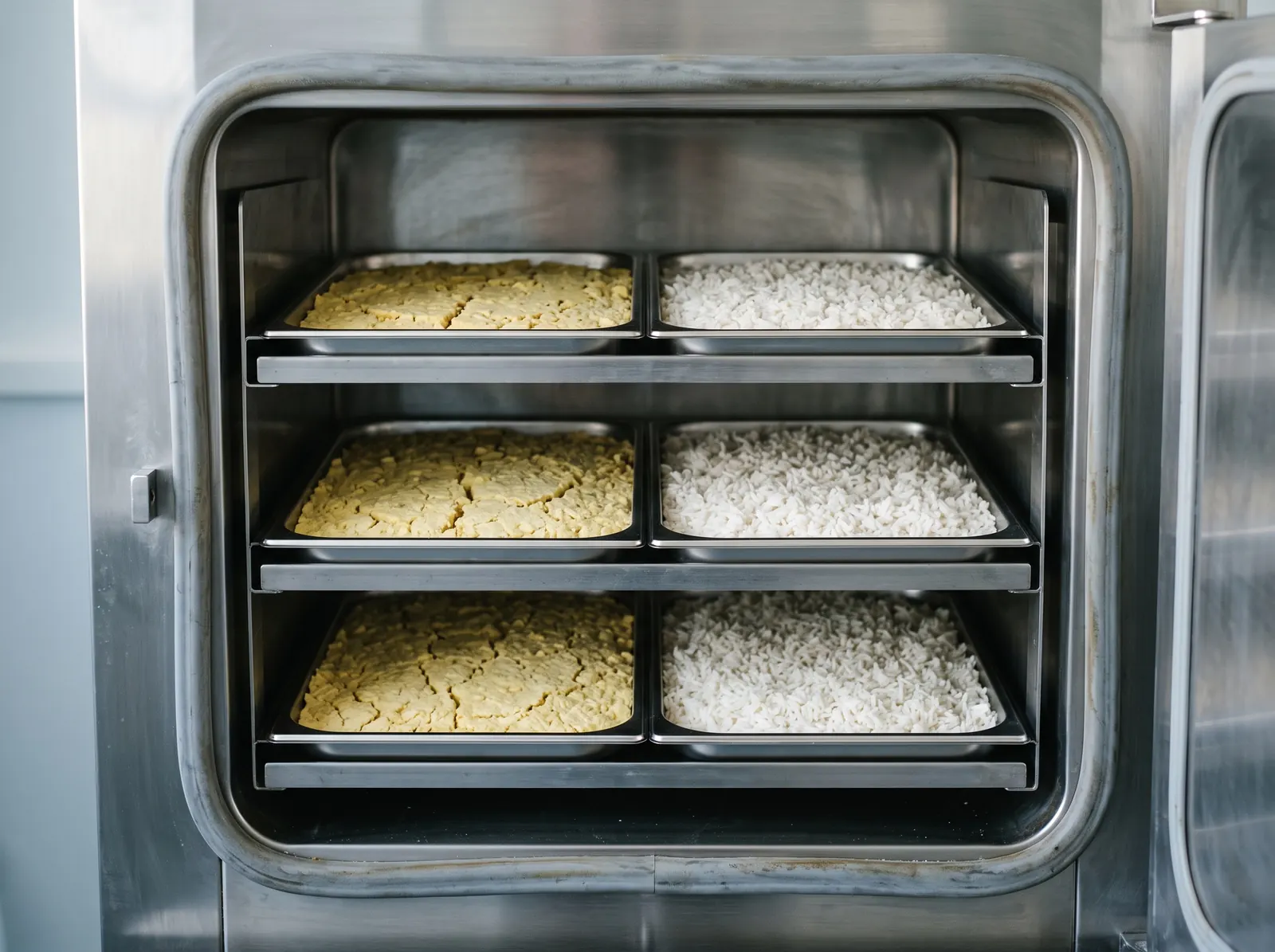
A little more warmth removes water still bound to the food. A few percent is left, too little for germs to grow.

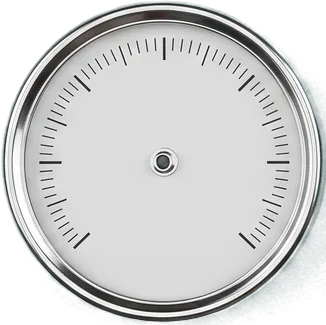

The weigh-in
100 g of cooked dal on the left. The same dal after freeze-drying on the right. The only thing missing is water.
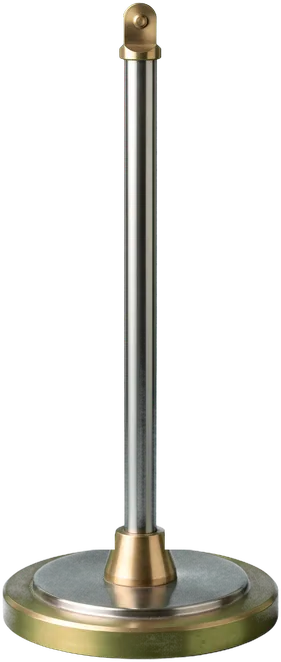


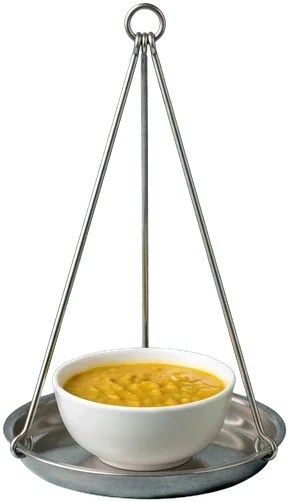
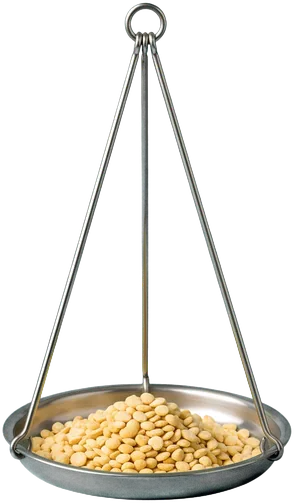
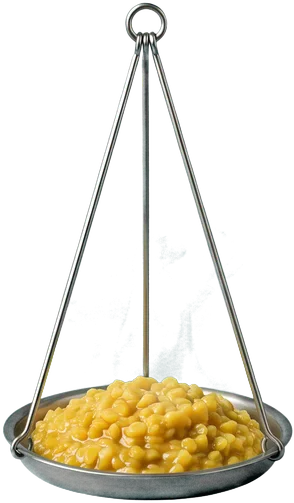
 Cooked, 100 gDried, 27 g
Right now the dry side weighs 27 g.
Common myths, checked
Six things people often say about freeze-dried food.
Words you will see
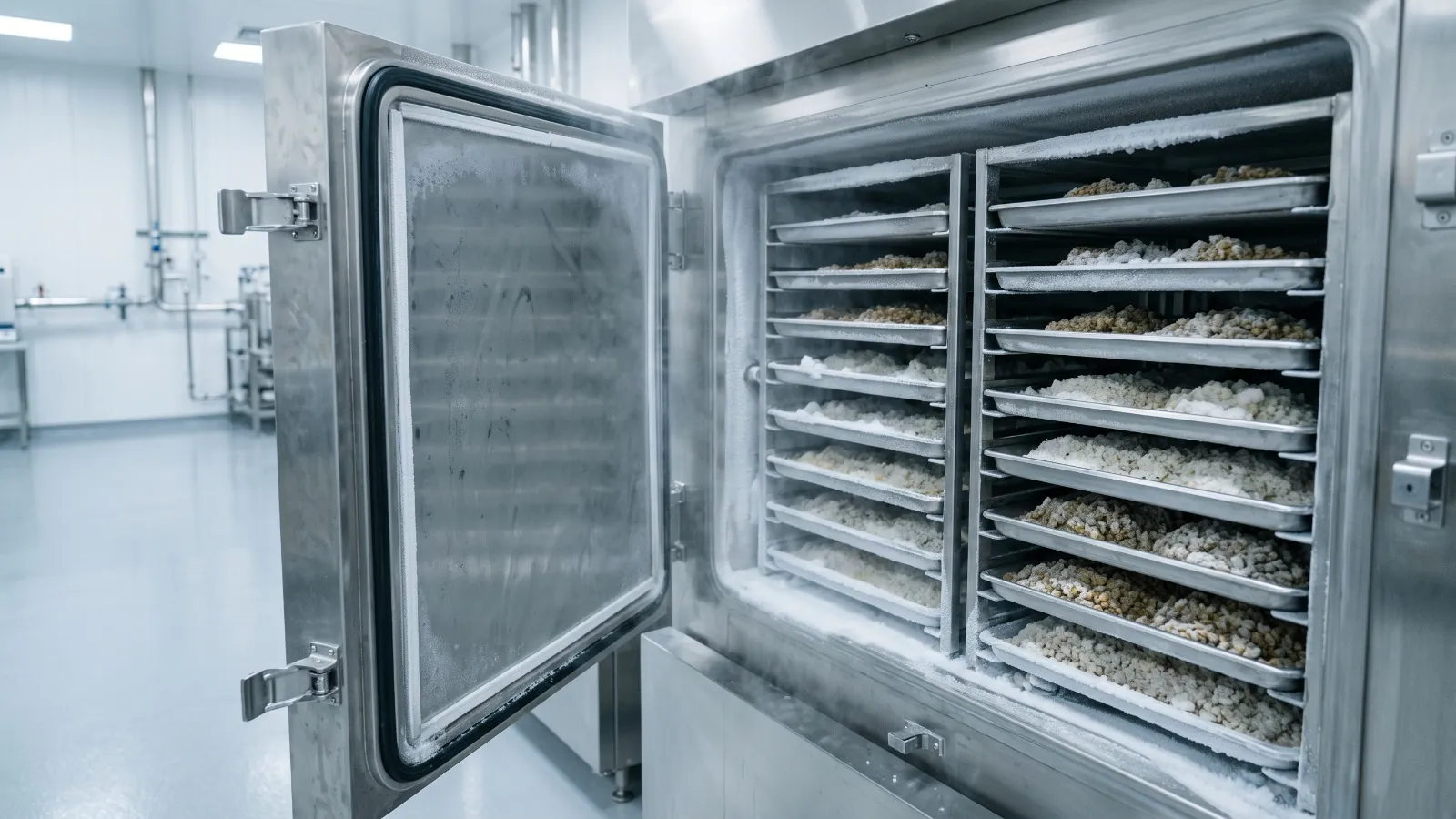
Where the trays go in
Spice Up Foods runs a freeze-drying plant in Kolkata. Dal, khichdi and other meals are cooked in small batches and freeze-dried with no preservatives.
See Spice Up Foods meals