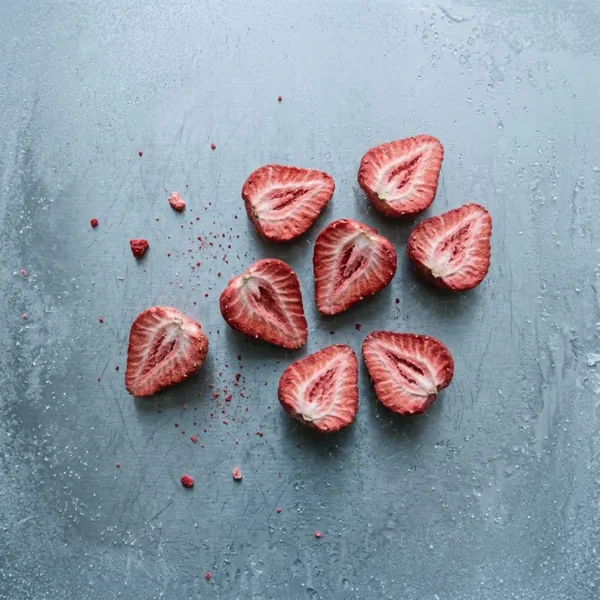
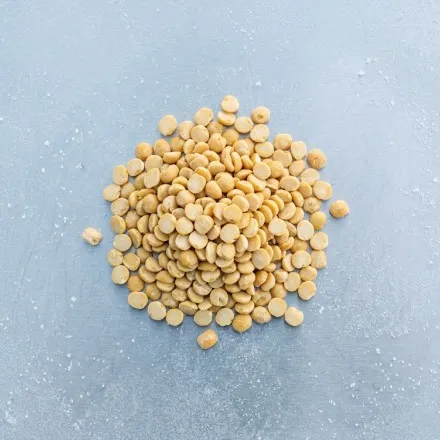
Freeze-dried vs dehydrated food: what is the difference?
Both take the water out of food so it keeps. The way they do it changes almost everything about how the food looks, tastes and comes back to life.
The short answer
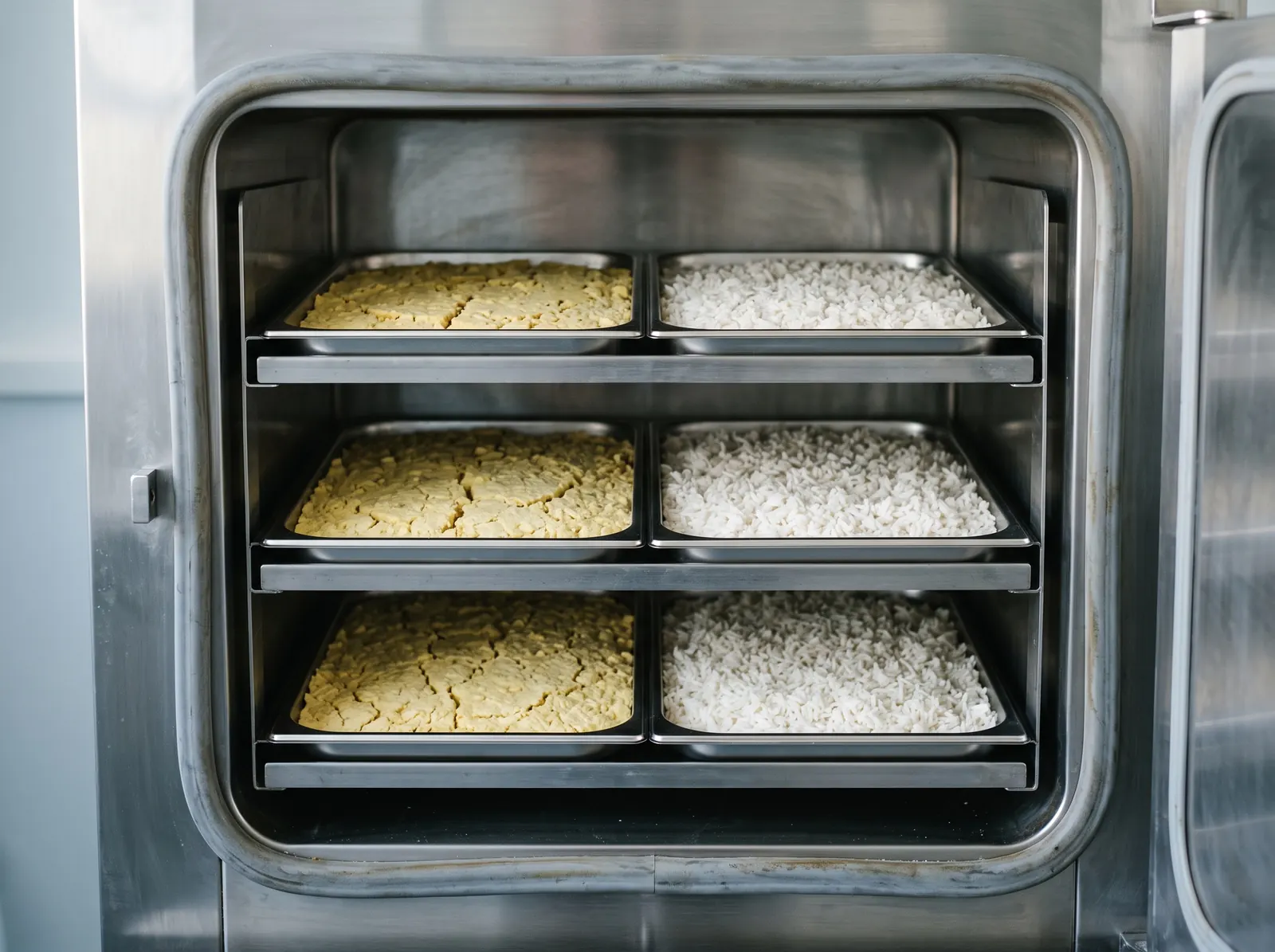
Dehydrating dries food with warm air over many hours. Freeze-drying freezes the food first, then pulls the ice out as vapour inside a vacuum, with very little heat. Dehydrated food shrinks and turns chewy. Freeze-dried food keeps its shape, turns light and crisp, and soaks water back up much faster.
How dehydrating works
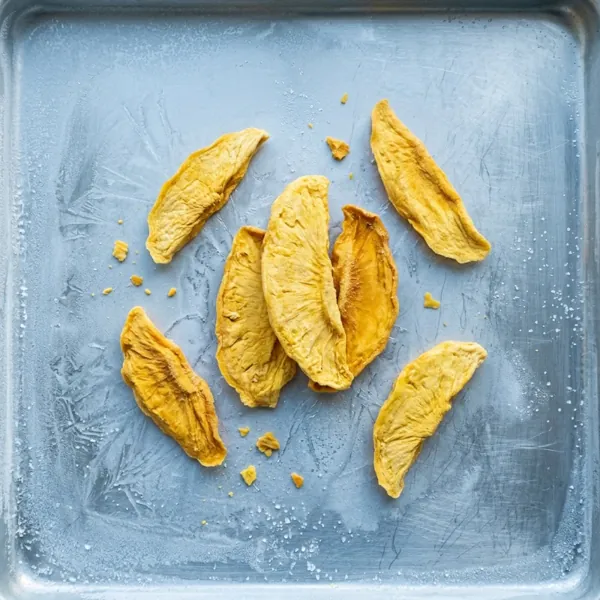
A dehydrator, a low oven or the sun blows warm air over the food. The water at the surface evaporates, more water moves out from inside, and the food slowly shrinks as it dries. It works well and is cheap, which is why raisins, dried mango strips and most home-dried vegetables are made this way.
The heat and the long time change the food. Colours darken, cells collapse and the food turns dense and leathery. Some of the water also stays behind, so dehydrated food usually keeps less water out than freeze-dried food.
How freeze-drying works
The food is frozen hard, often to around minus 40 °C, so its water becomes ice crystals. A pump then lowers the pressure to a tiny fraction of normal air. At that low pressure, ice does not melt into water. It turns straight into vapour, which is caught as ice on a very cold coil. The shelves warm a little to keep this going until almost all the water is gone.
Because the water leaves while the food is frozen, the structure stays in place. Tiny holes are left where the ice crystals were. Those holes are why freeze-dried food is so light and why it takes water back in so quickly.
Side by side
| Dehydrated | Freeze-dried | |
|---|---|---|
| How it dries | Warm air over hours | Freezing, then vacuum |
| Heat | Moderate, for a long time | Very little |
| Shape | Shrinks and wrinkles | Keeps its shape |
| Texture | Chewy or leathery | Light and crisp |
| Colour | Often darker | Close to fresh |
| Water left | More | A few percent |
| Bringing it back | Slow, often needs cooking | Fast, often just hot water |
| Cost to make | Low | Higher |
Which one keeps longer?
Freeze-dried food usually keeps longer, because less water is left for germs and stale flavours. How long either one lasts depends far more on the pack than the method: food sealed away from air, moisture and light keeps much longer than food in an open bag.
Which one is better for meals?
For cooked meals like dal, khichdi or curries, freeze-drying wins. The meal comes back close to how it was cooked, with only hot water and a few minutes. Dehydrated meals often need to be simmered to soften, and the texture changes more.
For snacks like apple rings or mango strips, dehydrating is fine and cheaper, as long as you like a chewy texture.
How to tell them apart in a shop
- Freeze-dried food is very light for its size and feels hollow.
- It snaps or crumbles instead of bending.
- It keeps a bright, close-to-fresh colour.
- Dehydrated food is denser, darker and bends before it breaks.
Prefer freeze-dried Indian meals ready to eat? Spice Up Foods cooks dal, khichdi and pav bhaji in Kolkata and freeze-dries them with no preservatives.
See Spice Up Foods mealsCommon questions
Is freeze-dried food healthier than dehydrated food?+
Freeze-drying uses less heat, so it usually keeps more of the heat-sensitive vitamins. Both keep most of the fibre and minerals.
Can you freeze-dry food in a dehydrator?+
No. A dehydrator only blows warm air. Freeze-drying needs freezing plus a vacuum pump.
Why is freeze-dried food more expensive?+
The machines cost more, a cycle takes many hours, and the vacuum pump and cooling use a lot of power.